


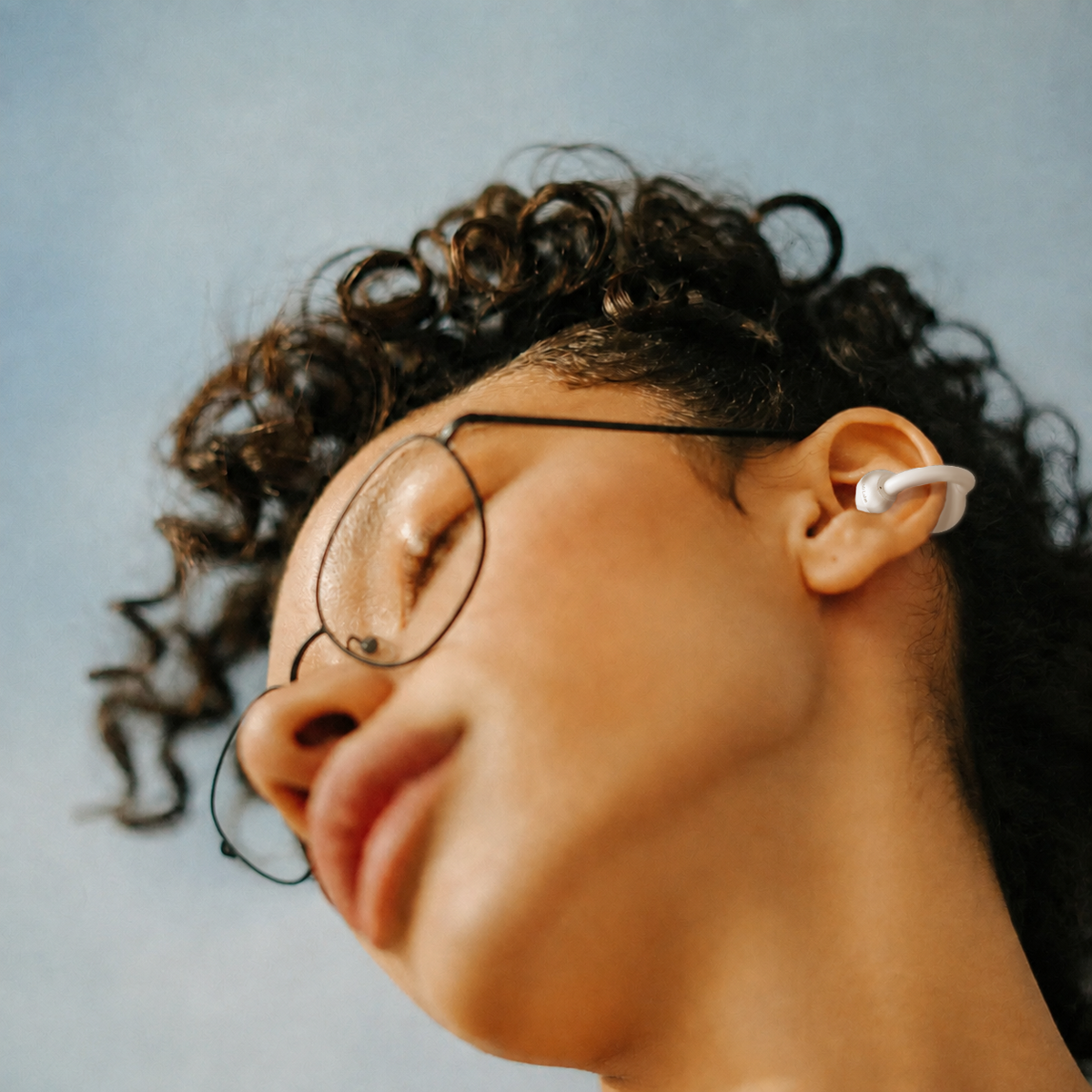
SoClip Pebble is an open-ear, clip-on earbud: its speaker sits beside the ear rather than sealing the ear canal. Consider this design if you prefer audio without an in-ear tip, and assess contact pressure, stability and sound leakage in your own setting. Fit varies between people. The earbuds play audio and handle calls; the SoLabs App supplies supporting content and settings.
By S&O Labs Editorial Team · Updated
Choosing for your day
| Your need | What to consider | Limit to keep in mind |
|---|---|---|
| Prefer no in-ear tip | The clip-on structure leaves the canal unsealed | Check pressure and speaker position on your own ear |
| Share a quiet workspace | Start at a low, comfortable volume | Directional sound is not a zero-leakage promise |
| Use guided pauses | Pebble plays audio selected through the phone or App | The device does not diagnose emotions or guarantee calm |
Sometimes, you want music or a phone call without closing yourself off from the room. SoClip Pebble approaches that need with an open-ear, clip-on design: the speaker sits beside the ear rather than inside the ear canal.
The idea is to make audio part of your day while leaving room for surrounding sound. Here is how the C-bridge, lightweight construction and acoustic design work together—and what to check when deciding whether this style suits you.
SoClip Pebble design at a glance
| Design detail | Specification |
|---|---|
| Wearing style | Open-ear clip-on, without an in-ear tip |
| Support structure | C-bridge with shape-memory titanium wire |
| Weight | Approximately 4.97g per earbud |
| Driver | One 10.8mm round, dual-magnet dynamic driver per earbud |
| Chip in the described configuration | AC7106D |
A lightweight fit starts with the C-bridge
The C-bridge connects the parts that sit in front of and behind the ear, forming the support for the clip-on fit. The construction uses ABS, PC, silicone, shape-memory titanium wire and aluminum-alloy buttons. The wire’s “memory” describes a material property, not automatic recognition of your ear shape.
At approximately 4.97g per earbud, weight is one part of the fit. Contact position, clamping pressure, ear shape and wearing time also matter. An earbud that feels light in your hand may still need adjustment on your ear.
Position the speaker near the ear-canal opening without inserting it, then check the contact points for pressure. An open-ear design removes the need for an ear tip inside the canal, making it an option to consider if you dislike an in-ear fit. It does not guarantee that every ear will experience the same comfort.
How the driver, chip and fit shape the sound
A 10.8mm dual-magnet dynamic driver
Each earbud uses a 10.8mm round, dual-magnet dynamic driver. The electrical signal moves the diaphragm, and the earbud’s acoustic structure helps deliver the resulting sound to the area beside your ear.
Because the ear canal is not sealed, speaker distance, angle and background noise can affect the listening experience. Driver design matters, but so does the position you wear it in.
The role of the AC7106D
The technical configuration described here uses the AC7106D for audio decoding, digital signal processing and a differential audio output. Supported sampling rates, audio effects and interfaces provide engineering building blocks; the finished sound still depends on the driver, acoustic chamber, software and tuning working together.
A chip name or driver measurement cannot describe the whole listening experience. Use familiar speech and music to assess the finished earbuds at a comfortable volume.
Directional sound does not mean zero leakage
Directional sound delivery and reduced leakage are design goals: audio should serve the wearer while limiting disturbance to people nearby. An open-ear speaker still sends sound into the surrounding space.
This overview does not include a complete sound-leakage test report, so it makes no promise that others will hear nothing. In a quiet shared space, check the specific listening level and seating distance you expect to use.
Open-ear listening: awareness and its trade-offs
Consider listening while tidying at home, when you want to remain available for a family member’s call, or taking a break at your desk without sealing your ears. These examples explain the design intention; they are not test results or guarantees of what you will hear.
How much surrounding sound you notice depends on its distance and loudness, your playback volume and where your attention is. An open-ear clip does not create the same physical seal as an in-ear tip. Start with whether you prefer an open fit or a more enclosed experience, then assess the model in your usual setting.
Open ears do not guarantee awareness or hearing protection. Audio can distract you or mask a warning. Pause when crossing roads, cycling or handling situations that need your full attention. Sound level and listening duration still matter; the World Health Organization’s safe-listening guidance offers advice on keeping volume down and taking breaks.World Health Organization
Make SoClip Pebble part of your everyday listening
Start with fit, then adjust the listening setup
For your first use, play something familiar at a comfortable volume. Adjust the clip position, then notice whether it stays comfortable and stable as you move normally. Glasses, a different hairstyle or activity may call for a small adjustment. If pressure becomes uncomfortable, remove the earbuds and take a break rather than forcing yourself to adapt.
A listening design for white noise, breathing guidance and meditation
S&O Labs also designs around quieter moments: a guided meditation, breathing prompts between tasks, or background sound during a pause. SoClip Pebble’s white-noise tuning is intended to give continuous sound a softer character with a more present, penetrating quality, with meditation, yoga and personal reflection among the listening settings in mind. This describes the intended sound character, not a therapeutic effect.
The SoLabs App provides white noise, breathing guidance and meditation. The app supplies content and guidance; the earbuds provide the listening experience. Choose one activity that fits your moment rather than treating all three as a routine you must complete.S&O Labs
Frequently asked questions
Do SoClip Pebble earbuds go inside the ear canal?
No. They use an open-ear clip-on structure that places the speaker beside the ear and leaves the canal unsealed.
Does a 4.97g earbud guarantee a pressure-free fit?
No. Weight is only one factor. Ear shape, contact points, clamping pressure and wearing time influence comfort. Check your own fit instead of relying on weight alone.
Can people nearby hear open-ear earbuds?
They may. Directional sound and reduced-leakage design do not establish zero leakage. Check the volume and distance in your usual shared environment.
Choose a more open way to listen
SoClip Pebble is a design to explore when you want audio beside your ear rather than an ear tip inside it. Consider the structure, try the listening position, and decide whether that balance of fit and openness matches your day.
Visit the product page to explore the design and review the available options.
Explore SoClip Pebble Open-Ear Earbuds
Sources and editorial context
The dimensions, materials and component information retained below are existing brand-provided specifications, not measurements made for this article update. Public health guidance is used only for listening safety; it does not validate product comfort or therapeutic effects.
SoClip Pebble provides playback and calls. The SoLabs App supplies supporting content and relevant settings; it is not a promise of emotion diagnosis or future sensor functions. For the research behind optional wellness practices and its limits, see Method and Sources. Read our editorial policy or send a correction to support@solabs.ai.
General wellness information is not a substitute for professional medical advice. Stop a practice if it causes discomfort. Product specifications on this page are not clinical evidence.
Share:
Open-Ear vs In-Ear Earbuds vs Bone Conduction: Which Fits Your Day?
SoClip Pebble Call Noise Reduction: Dual Mics & 4D ENC