


Clip-on and earhook describe how an earbud stays on your ear, not a promise of better sound. Start with the space the device needs: a clip contacts the outer ear, while a hook extends over and behind it. Then check your glasses, normal movements and listening environment. Choose the specific pair that stays comfortable and steady, rather than assuming either shape wins for everyone.
Separate the wearing shape from the listening design
An earhook does not automatically mean open-ear: some hooked sports earbuds still have tips that seal the ear canal. This guide compares open-ear clip-on designs with open-ear earhooks. Shokz's category guide distinguishes these support structures. For the wider choice between a sealed fit, open listening and bone conduction, start with our open-ear versus in-ear guide. Bone conduction is a sound-delivery method, not another name for every open-ear earbud.
| Check | Clip-on | Open-ear earhook |
|---|---|---|
| Contact area | Around the outer ear; inspect the front and rear contact points | Over and behind the ear; inspect the top of the ear |
| Glasses and accessories | Check clearance around frames, earrings and the clip | Check where the hook and glasses arms meet |
| Movement | Try the exact model; shape alone cannot establish retention | Try the exact model; a hook is not a universal fit guarantee |
| Isolation | An open fit is not a sealed barrier to room noise | An open fit is not a sealed barrier to room noise |
Use your ordinary day as the test
Picture a desk-to-kitchen break: you stand up, look down for your phone and turn toward someone speaking. A useful fitting check repeats those ordinary actions, rather than just posing in front of a mirror. Try both sides; ears need not behave identically. If you keep catching or reseating a bud, record that as a fit problem instead of tightening or bending the frame beyond its instructions.
For exercise, add only movements you can safely perform in the trial setting, and check the model's stated use and water-resistance guidance separately. A successful seated trial does not prove running, inverted yoga or helmet compatibility. This is a decision checklist, not a report that we tested either category across those activities.
Glasses can change the decision
Wear the frames you actually use, including sunglasses if they differ. Look for contact that lifts a glasses arm, pushes a hook aside or catches the rear of a clip. Bose's model-specific instructions illustrate why fitting directions should come from the manufacturer; they are not proof of Pebble compatibility. Our SoClip Pebble design and fit guide explains the product's own open-ear form.
Decide whether open listening fits the room
A quiet office and a loud train create different problems. In the office, consider whether nearby people can hear your audio. On the train, ask whether you need isolation rather than simply a different attachment shape. Neither an open clip nor an open hook should be bought on the assumption that it blocks the carriage. Leave room in your decision for a sealed alternative when isolation is the main need.
Make the purchase decision in three checks
First, confirm the contact points feel acceptable without forcing the fit. Second, check your everyday accessories and movements. Third, compare the actual product's controls, care instructions and return terms. Keep these observations separate from promotional claims such as all-day comfort or never falls out. Those phrases do not tell you what happens on your ears.
Where SoClip Pebble fits
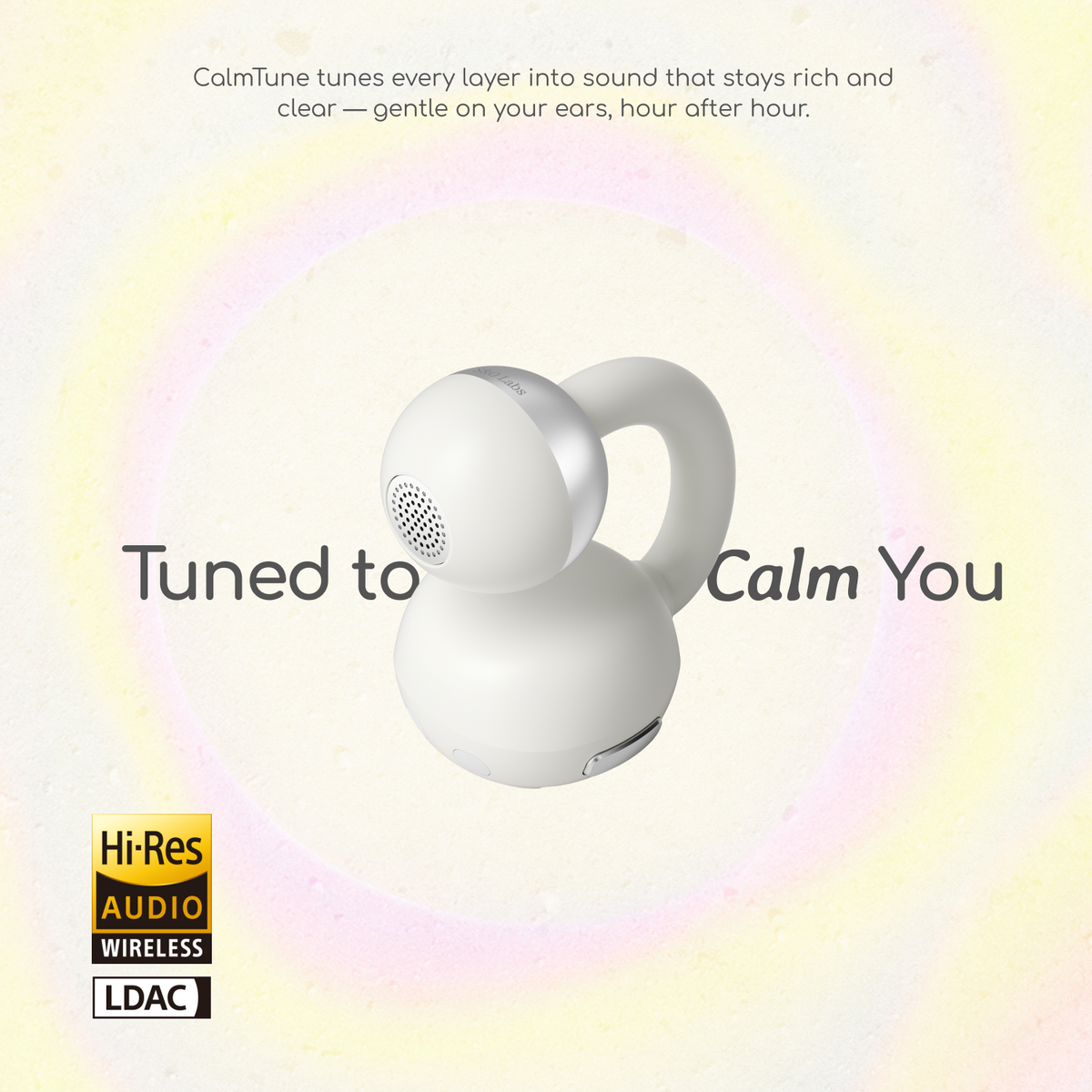
SoClip Pebble is an open-ear clip-on option, not an earhook design. If that wearing approach matches your priorities, explore SoClip Pebble and its current purchase options. Treat the product render as a view of the design, not evidence of a personal fit test. Read our method and sources for the boundary between listening hardware and general wellness information.
Share:
SoClip Pebble 5-Minute Reset: Open-Ear Listening for Everyday Pauses
Clip-On Earbuds With Glasses: Fit, Earrings and Comfort